 Jobboy

Introduction to Salary Transparency in 2026 Recruiting
Salary transparency has evolved from a nice-to-have into a core recruiting strategy for organizations competing for top talent. In 2026, job seekers actively search for roles that disclose pay ranges, viewing them as signals of fairness and employer trustworthiness. This how-to guide examines the benefits, legal landscape, real-world examples, and practical implementation steps to help HR professionals stand out in competitive markets. As talent acquisition becomes increasingly data-driven, companies that embrace open pay communication gain an edge in attracting diverse candidates and reducing time-to-hire. The shift reflects broader societal demands for equity, making transparency a key differentiator in employer branding efforts worldwide.
The Rise of Salary Transparency Trends in 2026
Market dynamics in 2026 show a clear preference among candidates for disclosed compensation details. Job boards and applicant tracking systems now prioritize postings with salary information, leading to higher visibility in search results. HR teams adopting this approach report improved alignment between candidate expectations and offered packages. This trend ties directly into talent acquisition keywords such as competitive compensation and equitable hiring practices, helping organizations build stronger pipelines of qualified applicants.
Key Benefits of Salary Transparency
Transparent pay practices improve application quality and reduce negotiation friction. Companies that publish ranges often see higher engagement from qualified candidates who self-select based on expectations. Transparency also strengthens employer branding, positioning organizations as progressive and equitable. Additional advantages include enhanced diversity in applicant pools, as underrepresented groups feel more encouraged to apply when pay equity is evident. Research from leading HR bodies shows that open pay communication correlates with stronger employee advocacy and reduced turnover risk. Furthermore, it minimizes unconscious bias during screening by focusing discussions on skills and experience rather than salary history.
Legal Considerations Across Regions
Regulations continue to evolve. In the United States, several states require salary ranges in postings. Employers should consult official resources such as the U.S. Department of Labor for compliance guidance. In the European Union, pay transparency directives emphasize equal pay reporting. Canadian provinces have introduced similar mandates. Additional considerations apply in regions like Australia and parts of Asia where emerging laws focus on gender pay gap disclosures. Always verify local laws before finalizing job descriptions to avoid penalties and ensure postings meet jurisdictional requirements.
Pros and Cons with Real-World Company Examples
Pros include faster hiring cycles and improved diversity. Cons may involve internal equity adjustments or competitor benchmarking. For instance, tech firms like Buffer have long published salary formulas publicly, reporting stronger retention and positive employer brand perception. Traditional companies adopting ranges gradually often experience initial pushback but later note higher offer acceptance rates. Retail and finance sectors have seen similar patterns, with transparent organizations attracting candidates who value openness. Comparing transparent versus non-transparent postings reveals that transparent listings typically attract significantly more qualified applicants and foster greater trust during interviews.
Step-by-Step Implementation for Job Postings
- Conduct internal salary audits using market data to define competitive ranges aligned with role responsibilities and experience levels.
- Align ranges with job levels and experience tiers while factoring in location-based adjustments for hybrid or remote positions.
- Write clear posting language such as “Salary range based on experience and qualifications” and include total rewards highlights.
- Train recruiters on discussing compensation openly and handling candidate questions about benefits or growth opportunities.
- Monitor metrics like application volume, quality scores, and time-to-hire after rollout to refine the process iteratively.
- Integrate feedback loops with hiring managers to ensure ranges remain relevant amid economic shifts.
These steps should be integrated with broader talent acquisition strategies to maximize impact and support long-term employer branding goals.
Effects on Employee Retention
Transparent organizations report lower voluntary turnover because employees understand how compensation decisions are made. Clear pay structures reduce perceptions of inequity that often drive exits. When combined with regular compensation reviews and career development discussions, salary transparency becomes a powerful retention tool rather than just a recruiting tactic. Case studies from mid-sized enterprises demonstrate that teams with open pay policies experience higher engagement scores and stronger loyalty over multi-year periods.
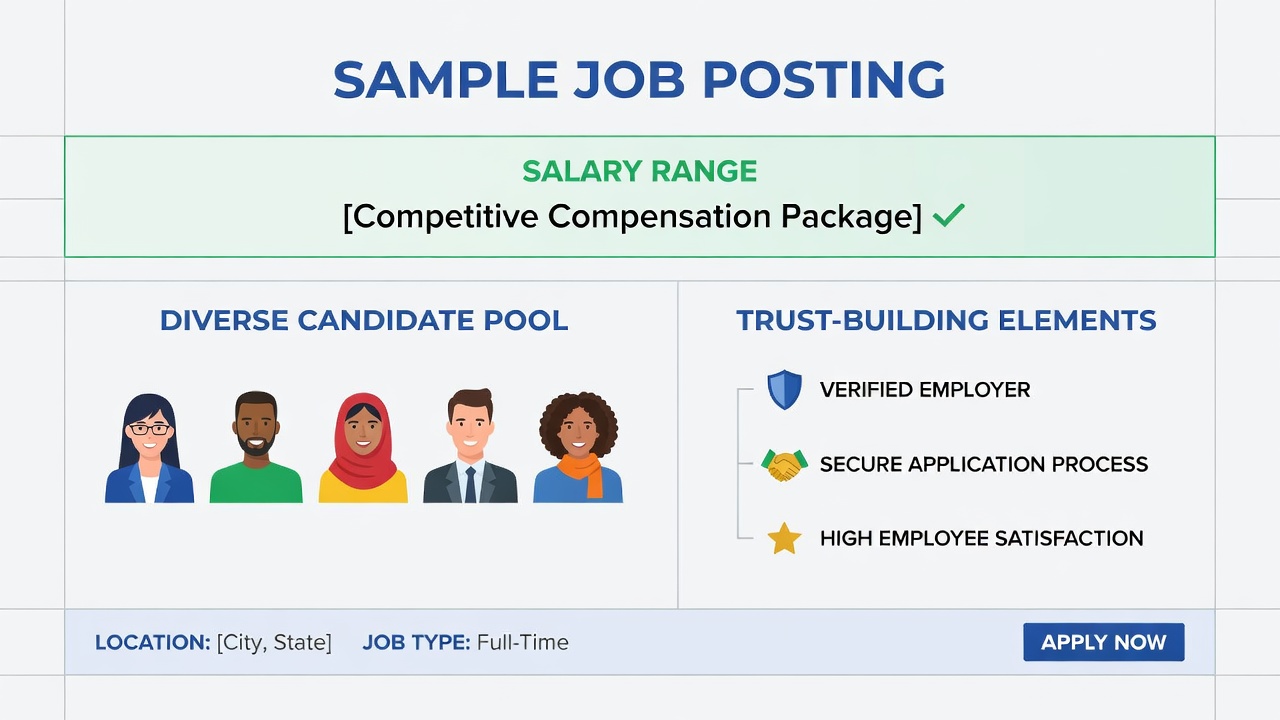
Transparent vs Non-Transparent Approaches: A Comparison
- Application Quality: Transparent postings filter for candidates aligned with the range; non-transparent listings generate more mismatched applications that waste recruiter time.
- Time-to-Fill: Transparent roles often close faster due to fewer negotiation rounds and clearer expectations from the outset.
- Employer Brand: Transparency enhances reputation on review sites and social platforms, leading to organic referrals.
- Internal Equity: Non-transparent systems can hide pay gaps that surface during audits, creating legal and cultural risks.
- Candidate Experience: Open ranges build immediate trust, while secrecy can lead to frustration and withdrawal from the process.
Common Mistakes to Avoid
Avoid publishing outdated ranges or failing to update them quarterly. Do not use vague language like “competitive salary” when laws require disclosure. Ensure ranges reflect current market conditions to prevent candidate distrust. Another frequent error is neglecting to communicate total compensation beyond base pay, which can make even strong ranges appear less attractive. Finally, skipping internal alignment meetings before launch often results in inconsistent messaging across teams.
Practical Tips for Integrating Transparency with Employer Branding
Highlight salary transparency in career site content and social media campaigns to amplify reach. Share anonymized success stories from current employees who benefited from clear pay structures. Partner with diversity-focused organizations to promote these practices, reinforcing the company’s commitment to equity. Regularly audit external job boards to confirm consistency across all postings.
Frequently Asked Questions
Does salary transparency reduce negotiation leverage?
No. It shifts conversations toward total rewards and career growth rather than base pay haggling, often resulting in more productive discussions.
How often should ranges be updated?
Review ranges at least every six months or after major market shifts to maintain competitiveness and accuracy.
Is transparency required for all roles?
Requirements vary by jurisdiction; check local regulations and consider voluntary adoption for competitive advantage in talent acquisition.
What if internal pay equity issues surface?
Use the findings as an opportunity for structured adjustments and clear communication to rebuild trust among existing staff.
How does transparency affect remote versus onsite roles?
Remote positions benefit equally by clarifying location-adjusted ranges, reducing confusion for distributed teams.
Conclusion
Salary transparency in job postings delivers measurable advantages in talent acquisition and retention when implemented thoughtfully. By following the steps outlined above and staying current with legal requirements from sources like the Equal Employment Opportunity Commission, organizations can build trust and attract high-caliber professionals in 2026 and beyond. Embracing these practices positions companies for sustainable growth in an increasingly competitive hiring environment.


No comments yet. Be the first!