 Jobboy

Introduction to Ethical AI in Recruiting
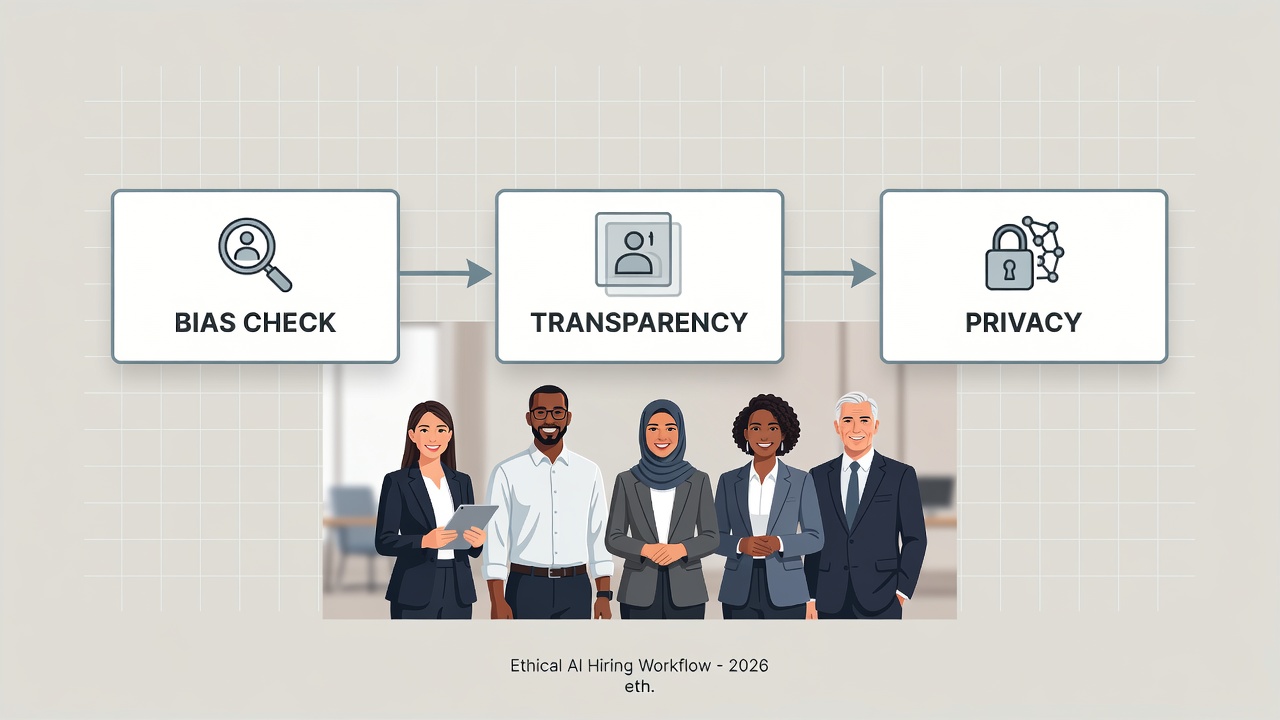
As organizations increasingly adopt artificial intelligence for talent acquisition in 2026, ethical considerations have become central to successful hiring strategies. AI tools can streamline resume screening and candidate matching, but without careful implementation, they risk perpetuating biases or eroding candidate trust. This guide provides a comprehensive overview of best practices, helping HR professionals navigate challenges while maximizing opportunities. Ethical AI use ensures fairness, accountability, and compliance with evolving regulations. By focusing on principles like bias mitigation and transparency, recruiters can build more inclusive processes that benefit both companies and applicants. The rapid evolution of AI capabilities means that what was acceptable in previous years may now fall short of emerging standards for responsible deployment in hiring workflows.
Key Principles of Ethical AI in Talent Acquisition
Understanding core principles is essential for responsible AI deployment. These include bias mitigation, transparency, data privacy, and fairness, each of which plays a distinct role in shaping trustworthy recruiting systems.
Bias Mitigation
AI algorithms trained on historical data may inherit past discriminatory patterns. Mitigation involves regular audits and diverse training datasets to promote equitable outcomes across gender, ethnicity, and other demographics. Techniques such as reweighting samples, using adversarial debiasing methods, and conducting disparate impact analyses help identify and correct skewed results before they affect real candidates. For instance, an AI model might initially favor applicants from certain educational backgrounds due to legacy data; mitigation strategies can recalibrate the model to value skills and experience more equitably.
Transparency
Candidates deserve clarity on how AI influences decisions. Disclosing AI usage in job postings and providing explanations for rejections fosters trust and reduces legal risks. Transparency also extends to internal teams, where clear documentation of model decision factors enables better oversight and adjustments over time.
Data Privacy
Protecting candidate information aligns with regulations like GDPR. Secure storage, consent mechanisms, and minimal data retention are critical to avoiding breaches. Organizations must implement encryption, access controls, and regular privacy impact assessments to safeguard sensitive details such as employment history and personal identifiers throughout the AI pipeline.
Fairness
Ensuring equal opportunity means evaluating AI outputs for disparate impact and adjusting models accordingly to support diverse hiring goals. Fairness metrics, including equalized odds and demographic parity, provide quantifiable ways to measure and improve system performance across protected groups.
Real-World Examples of Ethical vs Unethical AI Applications
Consider a tech company that implemented an AI resume screener without bias checks, leading to underrepresentation of certain groups—an unethical approach that damaged its reputation. In contrast, a retail chain used audited AI for candidate matching, incorporating human oversight and transparency reports, resulting in higher diversity hires and positive candidate feedback. Another example involves a financial services firm that faced public backlash after its AI tool was found to penalize non-traditional career paths; after remediation through independent audits and updated training data, the company restored trust and improved retention among new hires. These cases highlight the importance of proactive ethics in avoiding pitfalls while achieving better results. Unethical applications often stem from rushed implementations that prioritize speed over validation, whereas ethical ones integrate ongoing monitoring and stakeholder input from the outset.
5-Step Checklist for Implementing Responsible AI Tools
- Assess needs and select tools aligned with ethical standards. Begin by mapping current recruiting pain points and evaluating vendor claims against independent benchmarks for fairness and privacy.
- Conduct bias audits on selected platforms before deployment. Use third-party evaluators to test for disparate impact across multiple demographic categories and document all findings thoroughly.
- Train HR teams on AI limitations and interpretation of outputs. Provide workshops that cover common failure modes, such as over-reliance on keyword matching, and teach staff how to apply critical judgment to AI suggestions.
- Establish clear policies for human review of AI recommendations. Define thresholds where AI outputs must be escalated to recruiters or hiring managers, ensuring no automated decision stands alone without review.
- Monitor performance continuously and gather candidate feedback. Implement dashboards to track key metrics like diversity ratios and time-to-hire, while surveying applicants on their experience with the AI-driven process.
Comparisons of Popular AI Recruiting Platforms
Leading platforms differ in their ethical features. Some emphasize built-in fairness metrics and explainability, while others prioritize speed over transparency. Evaluating based on audit capabilities, privacy controls, and integration with compliance tools helps recruiters choose responsibly. For authoritative guidance on AI ethics, refer to resources from the U.S. Equal Employment Opportunity Commission. Platforms that offer customizable bias detection modules and detailed audit logs tend to support more responsible use cases, whereas those with opaque scoring systems require additional layers of human oversight to meet ethical standards.
Common Pitfalls to Avoid
Over-reliance on AI without oversight, ignoring regulatory updates, and failing to communicate with candidates are frequent errors. Additionally, neglecting data security can lead to severe compliance issues. Other pitfalls include using outdated training data that no longer reflects current workforce diversity, skipping vendor due diligence on ethical certifications, and failing to document decision rationales for rejected candidates. Recruiters should also avoid treating AI outputs as definitive rather than advisory, which can introduce unintended discrimination and damage employer branding over time.
HR Tips for Compliance and Building Candidate Trust
Stay updated on laws through official channels like the Federal Trade Commission. Implement regular training, use explainable AI where possible, and create feedback loops with applicants. These steps enhance trust and reduce turnover in talent pipelines. Additional tips include publishing annual AI ethics reports, offering opt-out options for AI screening where feasible, and collaborating with legal teams to review contracts with AI vendors. Building candidate trust also involves clear communication about data usage timelines and providing avenues for candidates to request human review of their applications.
Conclusion
Ethical AI adoption in recruiting positions organizations for sustainable success in 2026. By prioritizing principles, following checklists, and learning from examples, HR leaders can create fairer, more effective hiring processes that stand up to scrutiny and deliver long-term value.
FAQ
How can recruiters ensure accountability when using AI?
Accountability comes from documented processes, regular audits, and maintaining human oversight in final decisions. Establishing clear chains of responsibility and logging all AI-assisted steps further strengthens accountability frameworks.
What regulatory changes should recruiters watch in 2026?
Expect continued emphasis on AI transparency and bias reporting; monitor updates from bodies like the OECD for global standards and emerging regional requirements.
Is it possible to fully eliminate bias in AI recruiting tools?
While complete elimination is challenging, ongoing mitigation strategies significantly reduce risks and improve outcomes when combined with diverse data practices and continuous evaluation.
How should companies handle candidate data after an AI screening process?
Companies must delete or anonymize data according to stated retention policies, obtain explicit consent for any further use, and provide candidates with access to their stored information upon request.
What role does human judgment play alongside AI recommendations?
Human judgment serves as the final safeguard, reviewing AI outputs for context-specific nuances that algorithms may miss and ensuring decisions align with organizational values and legal standards.


No comments yet. Be the first!