 Jobboy

Precommitment Strategies for 2026 Career Goal Sticking Power
Many professionals enter the new year with ambitious targets for upskilling, networking, and earning promotions, yet distractions often derail progress by mid-year. Precommitment devices drawn from behavioral economics provide a proven way to lock in 2026 goals by restricting future choices and aligning daily actions with long-term success. These strategies help overcome present bias, where immediate gratification overrides future benefits. This comprehensive guide examines Ulysses-style tactics, accountability apps, public pledges, real-world mid-career examples, detailed setup routines, common pitfalls, measurement frameworks, neuroscience foundations, and adaptations for career changers.
Understanding Precommitment in Behavioral Economics
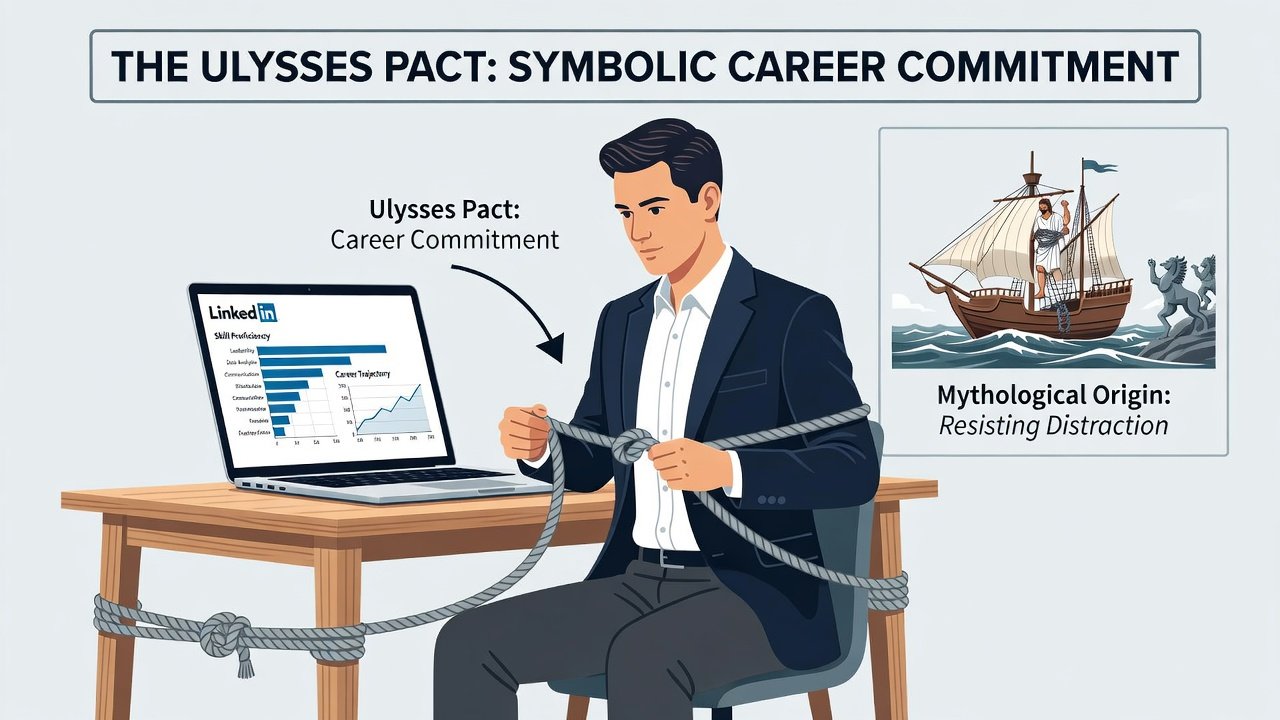
Precommitment refers to actions taken in the present that limit options later, making it harder to abandon goals when motivation wanes. The concept originates from behavioral economics, which studies how psychological factors influence economic decisions. A classic illustration is the story of Ulysses, who ordered his crew to tie him to the ship's mast so he could hear the sirens without steering toward danger. In modern careers, professionals apply similar logic by creating barriers against procrastination or distraction. For example, someone aiming for a 2026 promotion might precommit to weekly skill-building sessions by paying for an expensive course upfront. This approach counters hyperbolic discounting, where people undervalue future rewards. Resources from behavioral economics platforms highlight how such devices improve goal adherence across professional domains. By understanding these principles, individuals can design commitments that feel binding yet flexible enough for real life.
Ulysses-Style Tactics for Career Goals
Ulysses tactics involve removing the ability to choose poorly in the future. Career applications include enrolling in non-refundable training programs, scheduling non-negotiable meetings with mentors, or using website blockers during focused work periods. Mid-career professionals often find success by combining multiple tactics. One project manager aiming for a senior role in 2026 precommitted by joining a paid mastermind group and deleting entertainment apps from her phone during weekdays. Another analyst committed to daily coding practice by setting up automatic transfers to a savings account that only unlocked upon verified progress reports.
Step-by-Step Setup Routine
- Clarify your primary 2026 objective, breaking it into quarterly milestones such as completing three certifications or expanding your network by fifty contacts.
- Map out likely distractions, including social media, family obligations, or work emergencies, and rank them by impact.
- Select binding mechanisms like financial stakes, social contracts, or environmental changes such as dedicated workspace rules.
- Document the commitment in writing and share it with an accountability partner for added enforcement.
- Schedule initial implementation within forty-eight hours to build momentum before resistance arises.
- Plan for periodic reviews to refine the device without fully releasing it.
Following this routine ensures commitments are specific and actionable rather than vague resolutions.
Accountability Apps and Tools
Digital tools amplify precommitment by automating enforcement. Platforms such as StickK allow users to set monetary penalties for missed goals, while Beeminder tracks progress with escalating financial consequences. Other options include Focus@Will for audio environments that support deep work and calendar integrations that lock time blocks. A mid-level engineer used an app to commit ten hours weekly to machine learning study; missing sessions triggered donations to charity. These tools reduce the cognitive load of constant self-monitoring. When selecting an app, evaluate ease of use, integration with existing workflows, and the severity of penalties to avoid discouragement from overly harsh setups.
Public LinkedIn Pledges and Case Studies
Public declarations on LinkedIn create social pressure that reinforces private commitments. Posting quarterly updates with specific metrics invites community accountability and often attracts unexpected opportunities. Consider the case of a marketing director who pledged in January 2026 to publish bi-weekly thought leadership posts on emerging AI trends; by June she had secured two speaking invitations and a promotion. Another example involves a finance professional who announced a goal of attending four industry events per quarter and documenting takeaways. Her consistent visibility led to three job offers within eight months. These cases demonstrate how public pledges accelerate networking consistency and skill acquisition through repeated exposure.
Neuroscience Angles on Decision Fatigue
Neuroscience research shows that precommitment conserves mental resources by minimizing daily decisions. The prefrontal cortex, responsible for executive function, becomes depleted after repeated choices, leading to decision fatigue. By establishing rules in advance, individuals bypass this depletion. Studies referenced by psychological associations indicate that pre-set commitments improve sustained attention and reduce stress hormones. This effect proves especially valuable for mid-career professionals juggling leadership responsibilities with personal development. Implementing evening reviews of the next day's commitments further protects cognitive bandwidth for high-value tasks.
Common Pitfalls Like Overcommitment
- Overcommitment occurs when individuals set multiple ambitious devices simultaneously, leading to overwhelm and eventual abandonment; start with one primary goal.
- Choosing weak mechanisms that allow easy loopholes undermines effectiveness; ensure penalties or restrictions feel genuinely uncomfortable.
- Failing to account for life disruptions such as illness or family needs can cause guilt; build in compassionate adjustment clauses.
- Ignoring measurement leads to drift; always pair commitments with tracking systems.
- Copying others' tactics without personalization reduces buy-in; tailor devices to your specific motivations and work style.
Measurement Frameworks and Quarterly Audits
Effective measurement uses OKRs linked to quarterly audits. Define key results such as number of modules completed or new connections made. During audits, review completion rates, adjust devices if needed, and celebrate milestones to reinforce behavior. A practical checklist includes logging weekly activities, comparing against targets, identifying barriers, and updating the precommitment contract. This framework turns abstract goals into verifiable progress and supports faster skill acquisition over the year.
FAQ: Adapting for Career Changers
How do career changers use these strategies? Begin with micro-commitments like one informational interview per week before scaling to larger precommitments such as portfolio projects.
What if goals shift mid-year? Incorporate review triggers into the device that permit ethical revisions while maintaining overall direction.
Are these tactics suitable for remote workers? Yes, digital tools and virtual accountability groups replace office-based oversight effectively.
How long should commitments last? Align durations with natural cycles like quarters to allow reflection without losing momentum.
Can precommitment work with team goals? Group pledges on shared platforms create collective accountability and improve collaboration consistency.
What neuroscience evidence supports adaptation for changers? Reduced decision fatigue helps maintain focus during uncertain transition periods, as supported by cognitive studies.
Conclusion
Precommitment strategies equip professionals with tools to achieve 2026 career targets despite inevitable distractions. By combining behavioral economics insights with practical routines, apps, public pledges, and rigorous measurement, individuals experience accelerated networking and skill development. Start small, refine through audits, and maintain flexibility to sustain long-term success.


No comments yet. Be the first!